
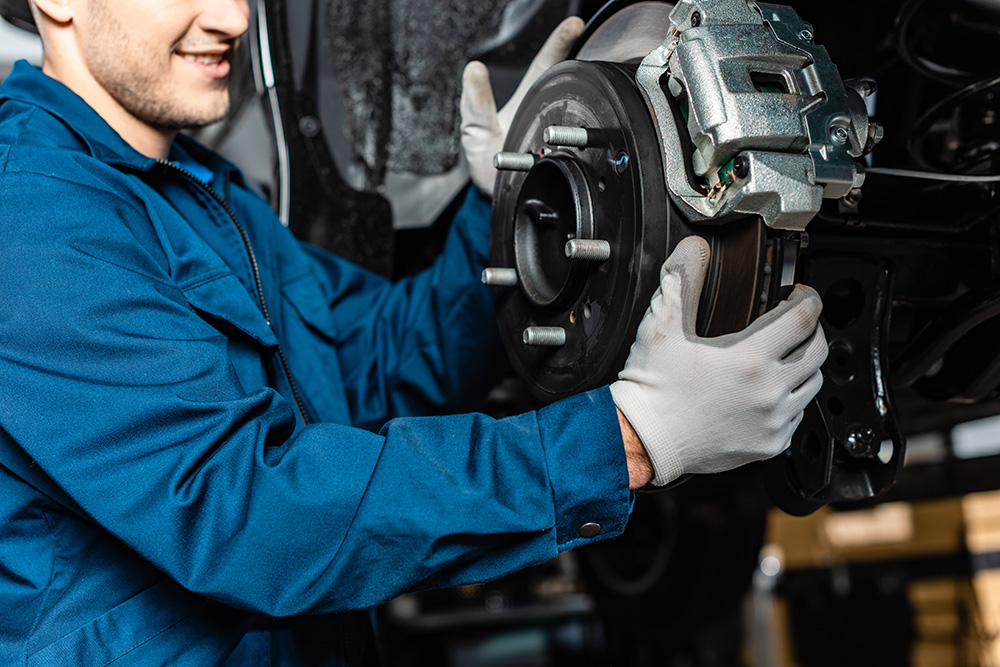
The experience of faulty brakes is a mix of fear and helplessness. You press the pedal expecting a firm, confident stop—but instead it feels soft, spongy, or unresponsive. The car might pull to one side, vibrate, or take much longer to slow down than you expect. Sometimes there’s a grinding noise or burning smell that makes your stomach drop. Every second feels longer as you realize you’re not fully in control, and instead of trust in your car, you’re left with a rush of panic and uncertainty about whether you can stop safely.

Likely Issues

Worn Brake Pads

Normal wear from friction against the rotors causes a squealing or grinding noise, longer stopping distances, or a brake warning light.

Replace brake pads. Inspect rotors at the same time (resurface or replace if needed).

Warped Brake Rotors

Excessive heat from hard braking or worn pads creates steering wheel vibration when braking or a pulsing brake pedal.

Resurface (if minor) or replace rotors. Always install with fresh pads.

Air in Brake Lines

Leak or improper bleeding during service results in a soft or spongy brake pedal and reduced stopping power.

Bleed the brakes to remove air, refill with fresh brake fluid.

Brake Fluid Leak

Worn brake lines, hoses, or master cylinder seals lead to low brake fluid, puddling under the car, and a brake warning light.

Find and repair/replace the leaking component, then flush and refill the brake fluid.

Sticking Brake Caliper

Dirt, corrosion, or worn caliper pistons/slides cause the car to pull to one side, a burning smell, uneven pad wear, and reduced fuel economy.

Clean and lubricate caliper pins; replace the caliper if seized.

ABS (Anti-Lock Braking System) Failure

Faulty ABS sensor, wiring, or ABS control module causes an ABS warning light, brakes lock up under hard braking.

Scan codes, replace the faulty sensor or ABS module, and reset the system.

Overheated or Fading Brakes (Brake Fade)

Excessive braking, such as downhill driving or towing heavy loads, results in brakes feeling weak, pedal sinking lower, burning smell.

Pull over to let the brakes cool. Long-term: use lower gears downhill, upgrade pads/rotors for heavy-duty use.

Uneven Brake Pad Wear

Sticking calipers, misaligned hardware, or cheap pads result in one pad being thinner than the other, squealing, or pulling to one side.

Replace pads and correct the underlying cause (caliper service, hardware replacement).

Scroll to Top